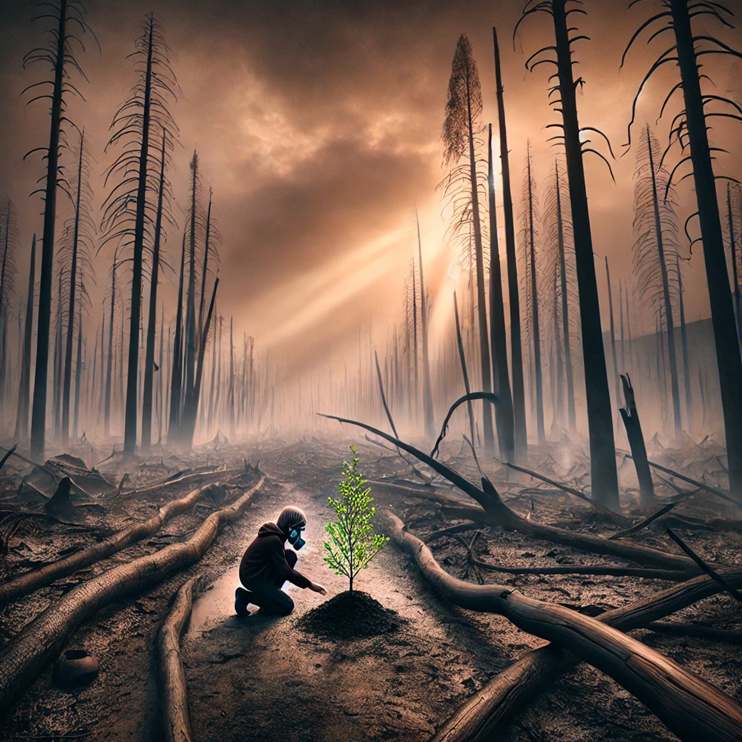
In January 2025, Southern California faced one of its most catastrophic wildfire seasons in recent history. Over 57,000 acres burned, leaving behind a trail of destruction that claimed 29 lives, obliterated over 18,000 structures, and decimated thousands of acres of once-thriving forest. While the immediate loss is staggering, the long-term environmental consequences—particularly the destruction of trees and critical habitats—demand our attention.
As the flames subside and the news cycle moves on, the true cost of these wildfires is only beginning to unfold. The devastation of our forests is not just an aesthetic or economic concern; it is a dire environmental crisis that threatens air quality, wildlife, and human health—especially for young, developing brains.
The Silent Victims: Trees and the Ecosystems They Sustained
Southern California’s forests, from the chaparral-covered hills to the towering pines of the San Gabriel Mountains, were not just bystanders in this disaster; they were casualties. These ecosystems, shaped over thousands of years, provided critical habitats for countless species, many of which are now displaced or facing extinction-level threats.
Birds, insects, and mammals that depended on dense foliage and tree canopies for shelter and food sources now find themselves in an alien, charred wasteland. Without trees, the soil—once held firm by extensive root systems—is now at risk of erosion, making landslides and flash floods a looming danger in fire-affected areas.
But the consequences extend beyond the natural world. With each tree lost, we lose a crucial component of our planet’s oxygen supply.
The Air We Breathe: A Future Choked by Smoke and Starved of Oxygen
Trees are the lungs of our planet, filtering pollutants and producing the oxygen we need to survive. The loss of tens of thousands of trees in a concentrated region like Southern California will have cascading effects on air quality.
In the wake of the fires, particulate matter from burned vegetation and buildings will linger in the air, exacerbating respiratory issues, particularly in children, the elderly, and those with preexisting conditions. Already, medical professionals are warning of increased cases of asthma, bronchitis, and other lung-related illnesses.
But the more insidious danger lies in what we don’t immediately see: the long-term reduction in oxygen levels. While the planet as a whole maintains a steady oxygen balance, localized tree loss can create microclimates with significantly reduced air quality. Research suggests that oxygen deprivation in developing brains can lead to cognitive impairments, reduced attention spans, and increased risks of developmental disorders.
Children growing up in fire-affected areas over the next two decades may face learning challenges linked to prolonged exposure to air pollutants and diminished oxygen intake. The effects may not be as dramatic as those seen in regions with extreme pollution, but they will be measurable—especially for children already predisposed to respiratory issues.
A Call to Action: Hope Takes Root in Reforestation
The devastation wrought by the January 2025 wildfires cannot be undone, but we are not powerless in the face of climate-driven disasters. Reforestation efforts must begin now, with both public and private sectors stepping up to restore what has been lost.
At Hopetakesroot.us, we are committed to ensuring that California’s forests don’t become a relic of the past. Here’s how you can help:
The scars of the January 2025 wildfires will remain for decades, but they don’t have to be the final chapter. With immediate action and sustained effort, we can ensure that hope takes root—one tree at a time.